
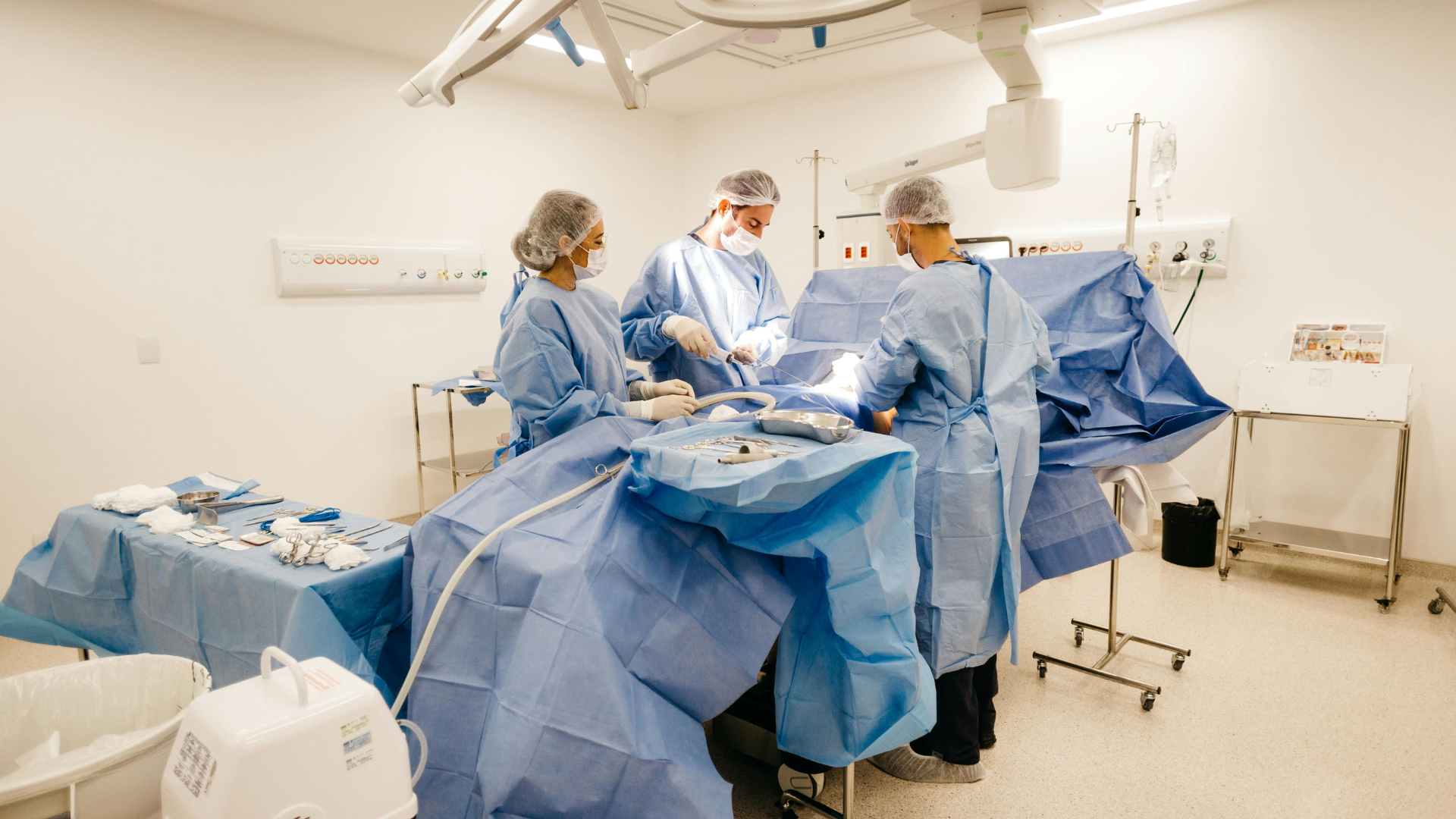
If you have been researching weight loss surgery in the Dallas area, you have probably seen the word “robotic” attached to it and wondered what it actually means.
Is a robot performing your surgery? Is it safer? Will you recover faster? These are fair questions, and the answers matter, because how your procedure is performed directly affects how you heal.
At CGA Weight Loss & Surgical Specialists, Dr. Chukwuma Apakama uses advanced robotic technology to serve patients across the Dallas-Fort Worth metroplex.
Here is a clear, honest look at what robotic bariatric surgery is and what it means for your recovery.
What Is Robotic Bariatric Surgery, Exactly?
Let us clear up the biggest misconception first: the robot does not perform your surgery. Your surgeon does. Every single movement is controlled by the surgeon in real time.
Robotic bariatric surgery, more accurately called robot-assisted surgery, uses a system such as the da Vinci Surgical System. As Cleveland Clinic explains, the system consists of three or four thin robotic arms holding tiny instruments and a high-definition 3D camera.
Your surgeon sits at a console beside you, viewing a magnified, three-dimensional image of the surgical area, and controls the instruments with hand and foot movements. The robotic arms translate those movements with more precision and a wider range of motion than the human wrist alone.
One reassuring detail: the instruments only move when the surgeon is actively controlling them. At no point does the system act on its own. The technology, first cleared by the FDA in 2000, has since been used in more than ten million surgeries worldwide.
Robotic vs. Traditional: What Actually Changes for You
Robotic surgery is a form of minimally invasive surgery, just like laparoscopic surgery. Both use a few small incisions rather than one large open incision, and both are a world apart from the open surgeries of decades past. So what does the robotic approach add?
- Enhanced precision. The wristed instruments bend and rotate in ways standard laparoscopic tools cannot, which helps with delicate steps like suturing.
- A magnified 3D view. Surgeons see depth and detail more clearly than with a standard 2D laparoscopic camera.
- Tremor filtration. The system smooths out the small natural movements of the human hand for steadier control.
- Better handling of complex cases. That precision can be especially valuable for patients with higher BMI, more difficult anatomy, or revisional surgery.
An honest note: robotic procedures can take slightly longer in the operating room, and the technology is more resource-intensive. What matters most is not the tool itself but the skill and experience of the surgeon using it. In the right hands, the robotic platform is a powerful extension of that expertise.
What the Research Says About Your Recovery
This is where it gets interesting for patients. Recent research suggests the robotic approach may offer measurable recovery advantages for certain procedures.
According to the American Society for Metabolic and Bariatric Surgery, studies of totally robotic gastric bypass found lower complication rates and shorter hospital stays compared with conventional laparoscopy.
The benefit was even more pronounced for patients with severe obesity and type 2 diabetes, a group for whom major complication rates were notably lower with the robotic approach.
Because the incisions are small, most patients also experience less post-operative pain, reduced blood loss, minimal scarring, and a quicker return to everyday activities.
As Mayo Clinic notes, minimally invasive bariatric surgery in general supports faster healing than open surgery, and the robotic platform builds on those advantages.
Your Recovery Timeline After Robotic Surgery
Every patient heals differently, and you should always follow the specific instructions from your care team. That said, here is what recovery often looks like after robotic bariatric surgery:
- Day of surgery: You will be up and walking within hours. Early movement lowers your risk of blood clots and jump-starts healing.
- First week: Expect some soreness at the small incision sites, managed with medication. You will be on a liquid diet as your stomach heals, and fatigue is normal.
- Weeks two to four: Energy returns, and you progress from pureed to soft foods. Many patients return to desk-based work around this stage.
- Weeks four to six: Most people are cleared to resume light exercise and normal activity, and the weight loss becomes visible and motivating.
- Beyond six weeks: With your surgeon’s clearance, you return to full activity and settle into the long-term habits that protect your results.
Smaller incisions and less tissue trauma are exactly why many robotic patients describe an easier early recovery than they expected.
Clearing Up Common Myths
Misinformation about robotic surgery is everywhere. Let us set the record straight:
- Myth: A robot operates on you automatically. Fact: Your surgeon controls every movement. The robot cannot act independently.
- Myth: Robotic surgery is experimental. Fact: The technology has been in widespread use for over two decades across millions of procedures.
- Myth: Recovery is the same no matter the technique. Fact: Minimally invasive approaches like robotic surgery generally mean less pain and faster healing than open surgery.
- Myth: The robot replaces the surgeon’s skill. Fact: It amplifies it. An experienced, fellowship-trained surgeon is still the most important factor in your outcome.
Is Robotic Bariatric Surgery Right for You?
Robotic surgery is not a separate operation; it is a method of performing procedures like the gastric sleeve and gastric bypass. So the real question is whether you are a candidate for bariatric surgery at all.
Ask yourself:
- Is your BMI 35 or higher, or 30 and above with a condition like type 2 diabetes, high blood pressure, or sleep apnea?
- Have diet and exercise repeatedly failed to produce lasting results?
- Are you ready to commit to long-term lifestyle change?
If this sounds like you, check your BMI with our quick calculator, then bring that number to a consultation. Only a qualified surgeon can determine whether surgery, and which approach, is right for your body and goals.
Robotic Bariatric Care for Dallas Patients at CGA
For patients across Dallas and the surrounding metroplex, CGA brings robotic expertise close to home, with locations in Irving, Frisco, and Mansfield. Dr. Apakama is a board-certified surgeon with fellowship training in bariatric surgery, advanced laparoscopic and robotic surgery, and surgical critical care.
That combination matters: it means he has the training to handle complex, higher-risk cases and to use the robotic platform to its full potential.
Just as important, the technology is only one part of the picture. CGA pairs advanced surgical care with the comprehensive follow-up and support that turns a successful operation into lasting results, from nutritional guidance to long-term monitoring.
Ready to Explore Your Options?
Robotic bariatric surgery is not about the technology for its own sake. It is about giving you a smoother recovery and the best possible foundation for a healthier life. If you are ready to learn whether it is right for you, the next step is a simple conversation.
Book your consultation with CGA today, or explore our full range of weight loss surgery options. Expert, technology-driven care is closer than you think.
This article is for general educational purposes and is not a substitute for personalized medical advice. Candidacy for bariatric surgery and the appropriate surgical approach are determined through a clinical evaluation with a qualified surgeon.