
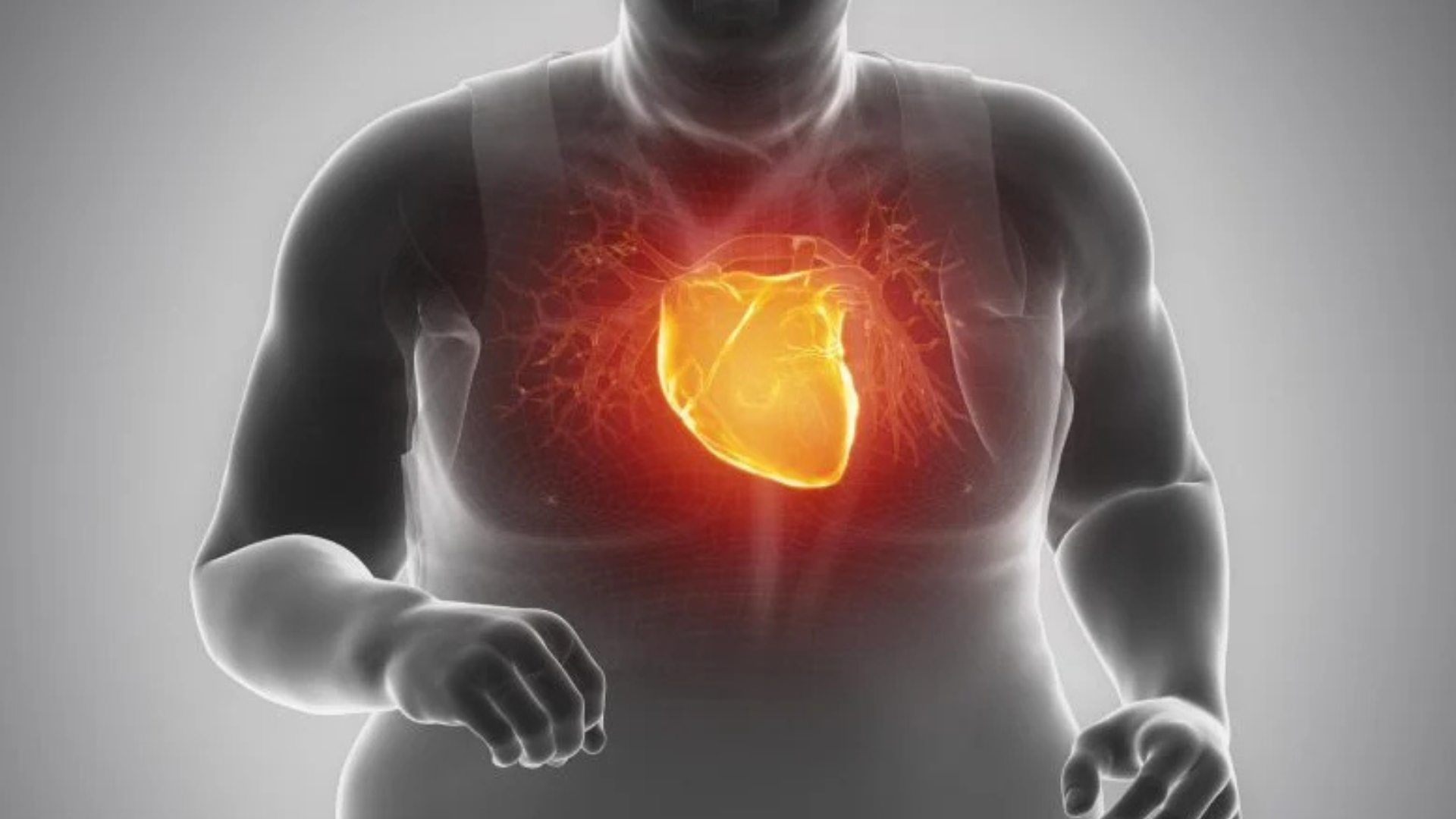
Most people associate heart disease with dramatic warning signs: a sudden chest clutch, a numb arm, a collapse. But the truth is that the heart rarely fails without first sending quieter signals, often for months or years, that something is wrong.
For people carrying excess weight, those signals deserve even closer attention.
Obesity is not just a risk factor that sits passively in the background. According to the American Heart Association, it is an independent risk factor for heart disease, meaning excess weight can damage the heart even in people who do not have high blood pressure, diabetes, or elevated cholesterol.
Obesity-related heart disease deaths in the United States increased by approximately 180% between 1999 and 2020. That number reflects decades of signals going unrecognized.
Here are seven warning signs that your weight may already be affecting your heart, and what you can do about them.
Warning Sign 1: You Get Short of Breath Doing Things That Used to Be Easy
Breathlessness during physical activity is one of the earliest and most reliable signals that the heart is under strain.
When excess body weight is present, the heart must pump a larger volume of blood through an expanded circulatory system. Over time, this causes the left ventricle to thicken and enlarge in a condition called left ventricular hypertrophy.
A thickened heart muscle becomes stiffer and less efficient at filling with blood between beats, reducing the amount of oxygen-rich blood reaching the body during exertion.
The result is that activities requiring moderate effort, such as climbing a flight of stairs, walking briskly to the car, or carrying groceries, leave you winded in a way that feels disproportionate to the effort involved.
This is not simply a fitness issue. If breathlessness comes on more easily than it used to, and particularly if it occurs at rest or wakes you from sleep, it is worth discussing with a physician promptly.
Warning Sign 2: Your Blood Pressure Is Consistently Elevated
High blood pressure is so common that it gets normalized. Millions of people live with readings above healthy ranges for years without connecting them to their weight.
The link is direct. For every 5% increase in body weight, the risk of developing hypertension rises by 20 to 30%.
Visceral fat, the fat stored around the internal organs, releases hormones including leptin that activate the sympathetic nervous system, cause the kidneys to retain sodium, and drive up vascular resistance. The result is elevated pressure pushing against artery walls with every heartbeat.
Left unaddressed, high blood pressure accelerates atherosclerosis, the buildup of fatty plaque inside artery walls, and significantly increases the risk of heart attack and stroke. Around three-quarters of primary hypertension cases can be attributed to obesity.
If your readings are consistently above the healthy range and your weight has been rising, the connection is likely not a coincidence.
Warning Sign 3: You Feel Persistent Fatigue Even Without Physical Activity
Unexplained fatigue that does not improve with rest is easy to attribute to sleep, stress, or life in general. But when it coexists with excess weight, it carries a different clinical significance.
Research from Johns Hopkins found that obesity can cause silent damage to the heart muscle itself, as reflected in elevated troponin T levels, an enzyme released by stressed heart cells.
Participants with the highest BMI had the most heart muscle injury over a 12-year follow-up period, even in the absence of traditional risk factors like hypertension or diabetes.
When the heart is working harder than it should and quietly losing function, fatigue becomes its loudest early complaint. The body simply cannot sustain normal energy output when the cardiovascular system is under constant excess load. If tiredness has become your baseline state and it feels out of proportion to your activity level, it is a signal worth taking seriously.
Warning Sign 4: You Notice Your Heart Racing or Beating Irregularly
Palpitations, a sense that the heart is pounding, skipping beats, or fluttering in the chest, are more closely tied to excess weight than most people realize.
Obesity is a significant and well-documented risk factor for atrial fibrillation (AFib), the most common cardiac arrhythmia in adults. The fat deposited around and within the heart, including epicardial fat, promotes electrical remodeling of the atria, the heart’s upper chambers.
It triggers inflammation and structural changes that disrupt the normal rhythm of electrical signals coordinating the heartbeat.
AFib carries serious downstream risks: it increases the risk of stroke fivefold and can lead to heart failure if untreated. The risk scales with weight. If you notice your heart racing unexpectedly at rest, feel fluttering or irregular beats, or experience episodes of dizziness paired with a rapid heartbeat, these symptoms warrant medical evaluation without delay.
Warning Sign 5: Your Legs or Ankles Are Swelling
Swelling in the lower legs, ankles, or feet, particularly when it leaves a visible dent if pressed, is a recognized sign of fluid retention and may indicate that the heart is not pumping efficiently.
When the heart struggles to move blood forward effectively, pressure builds in the veins returning blood from the lower body. Fluid leaks out of those vessels and collects in the surrounding tissue. This condition, called edema, is a cardinal feature of heart failure.
Obesity accelerates the path to heart failure. Research shows that the risk of developing heart failure increases by 41% for every five-unit increase in BMI.
The combination of increased blood volume, thickened heart walls, and elevated filling pressures creates conditions in which the heart’s output falls short of its demands. Leg swelling that is unexplained, persistent, or worsening over time is a sign worth examining in the context of your overall cardiovascular health.
Warning Sign 6: You Have Been Told Your Cholesterol or Blood Sugar Numbers Are Off
Numbers on a lab report can feel abstract, but elevated LDL cholesterol, low HDL cholesterol, and elevated blood glucose are not passive risk markers. They are active processes damaging arteries right now.
Obesity drives all three. Visceral fat promotes insulin resistance, which raises blood glucose and triglycerides while simultaneously lowering protective HDL cholesterol.
This combination feeds atherosclerosis, the progressive narrowing of coronary arteries as fatty plaque accumulates inside their walls. Research tracking more than 300,000 people found that a 10-kilogram increase in body weight is associated with a 12% higher risk of coronary artery disease.
Plaque-narrowed arteries reduce blood flow to the heart muscle. When a plaque ruptures, it triggers a heart attack.
Many people with these lab findings treat them as background information to monitor, without realizing the clock starts ticking the moment those numbers drift out of range.
Warning Sign 7: You Snore Heavily or Have Been Diagnosed with Sleep Apnea
This one surprises people because it does not feel like a heart symptom. But the connection between sleep apnea and cardiovascular disease is well established and clinically significant.
When breathing repeatedly stops during sleep, oxygen levels drop, triggering a stress response. Heart rate rises. Blood pressure spikes.
The sympathetic nervous system activates. Night after night, these repeated surges quietly damage the heart and blood vessels. Sleep apnea roughly doubles the risk of arrhythmias, including AFib, and significantly raises the risk of high blood pressure, heart attack, and stroke.
Obesity is the primary driver of obstructive sleep apnea in adults, accounting for more than 40% of total OSA cases. The excess tissue around the neck and upper airway is the direct cause of the airway narrowing that produces the obstruction.
If your partner reports your snoring, if you wake unrefreshed despite adequate sleep, or if you have already been diagnosed with sleep apnea, your cardiovascular risk is higher than your resting blood pressure reading alone would suggest.
What to Do If These Signs Sound Familiar
Recognizing these warning signs is not meant to cause alarm. It is meant to prompt action because the earlier these issues are addressed, the more reversible they are.
The single most impactful intervention for obesity-related cardiovascular risk is meaningful, sustained weight loss. Clinical data show that significant weight loss reduces blood pressure, improves cholesterol and blood glucose levels, decreases the burden on the heart, and can substantially reduce the severity of sleep apnea.
In many patients, atrial fibrillation episodes decrease or resolve entirely with sustained weight reduction.
For patients who have been unable to achieve lasting results through lifestyle changes alone, bariatric surgery offers the most durable and well-evidenced path to the level of weight loss that produces real cardiovascular benefit.
Studies consistently show that metabolic and bariatric surgery are associated with reduced all-cause mortality, substantially lower cardiovascular event rates, and increased median life expectancy.
The conversation starts with a consultation. Not a commitment. Just an honest conversation about where you are and what is possible.
Your Heart Is Worth the Conversation
At CGA Weight Loss & Surgical Specialists, Dr. Chukwuma Apakama and the team understand that heart health and weight are deeply connected.
With over 15 years of experience in bariatric and general surgery, and locations in Frisco, Irving, and Mansfield, TX, CGA provides personalized, medically-grounded care designed to address the root cause, not just the symptoms.
If any of these warning signs are present in your life, please do not wait for them to escalate. A consultation is the first step toward answers.
Book your consultation today →
This content is intended for informational purposes only and does not constitute medical advice. Please consult a qualified healthcare provider regarding your individual cardiovascular health and treatment options.